
Why most people get less fit after joining a gym has nothing to do with laziness and everything to do with how fitness is designed. This gym myth explains why most people quit the gym and end up less fit, not more.
The Lie No One Talks About
Let me guess.
You joined a gym.
You were excited.
You promised yourself this time I’ll be consistent.
And then life happened.
Work ran late.
Traffic killed your energy.
One missed workout became two.
Two became a week.
Then guilt replaced motivation.
And slowly you stopped going.
Here’s the part no one tells you:
Most people don’t fail at the gym.
The gym fails most people.
Not because gyms are bad.
But because they’re built for a life most people don’t live.
This article isn’t anti-fitness.
It’s anti-fitness guilt.
And by the end, you’ll understand why joining a gym often makes people LESS fit, not more and what actually works instead.
Why the Gym Became the “Default” (Even When It Shouldn’t Be)
Somewhere along the way, fitness got hijacked.
We were told:
No gym equals no fitness.
Miss workouts means you’re lazy.
Results only come from suffering.
The fitness industry sold a single story:
If you’re serious about health, you must go to the gym.
But that story ignores real life.
Most people today are busy.
Mentally tired.
Sitting all day.
Carrying stress, not just fat.
For them, the gym isn’t empowering.
It’s pressure.
And pressure doesn’t create consistency.
It creates burnout.
Gym vs Real-Life Fitness: An Honest Comparison
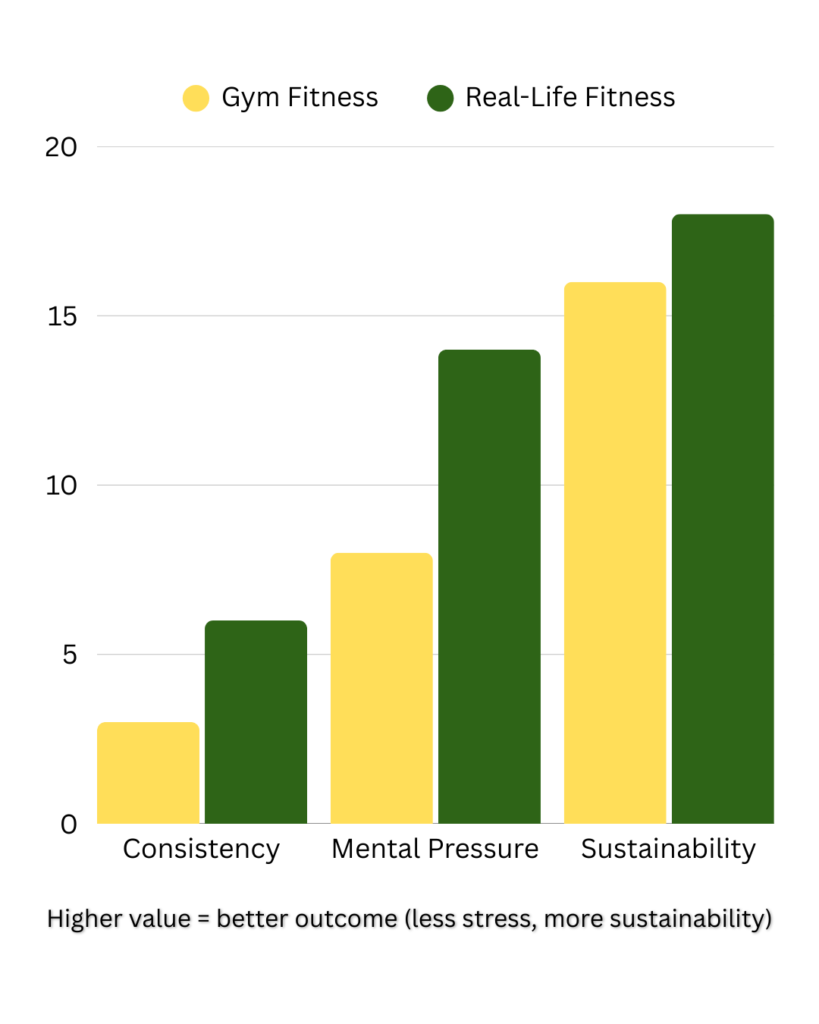
Here’s the truth most people feel but don’t say out loud:
| Gym-Based Fitness | Real-Life Fitness |
|---|---|
| Requires fixed time | Fits around life |
| All-or-nothing | Flexible |
| Miss a day = guilt | Miss a day = move tomorrow |
| High motivation needed | Low motivation required |
| Short-term bursts | Long-term habits |
This isn’t about gym vs no gym. It’s about systems that survive real life.
The gym can work for people whose lives revolve around it. But most people’s lives don’t.
Real-life fitness works because it doesn’t punish you for living, you can actually eat what you want without dieting and still stay consistent.
The Motivation Trap: Why Gym Results Collapse Over Time
This is where things usually fall apart. Gym Motivation Over 6 Months vs Lifestyle Movement.
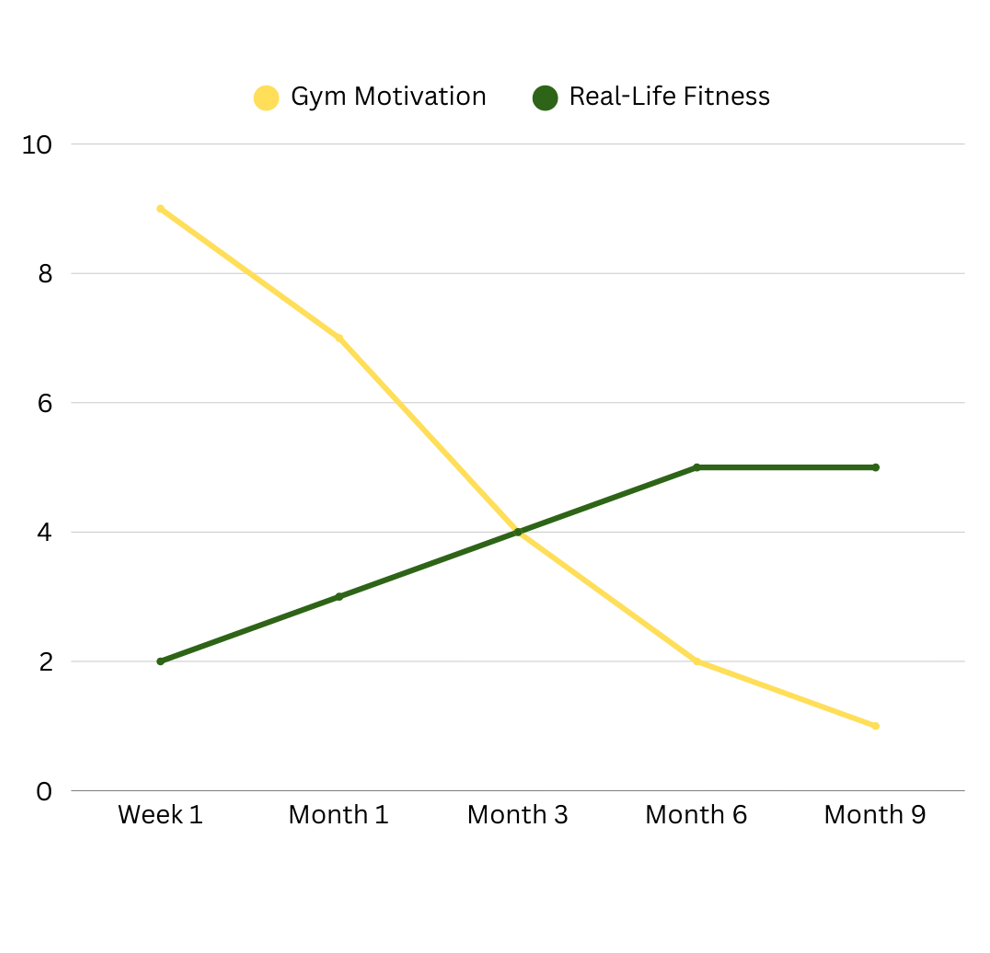
Here’s the pattern.
Month one feels amazing.
New clothes.
New playlist.
New hope.
Month two or three, life interferes.
Work pressure increases.
You miss sessions.
Guilt starts whispering.
By month four or five, motivation drops.
You feel behind.
Ashamed.
Eventually, you stop going altogether.
This is not laziness.
This is human psychology.
The gym depends on motivation.
But motivation is unreliable.
Real fitness depends on systems, not hype.
Most people don’t fail overnight, they ignore the early warning signs their body gives them until burnout forces them to stop completely.
Why Most People Actually Get Less Fit After Joining a Gym
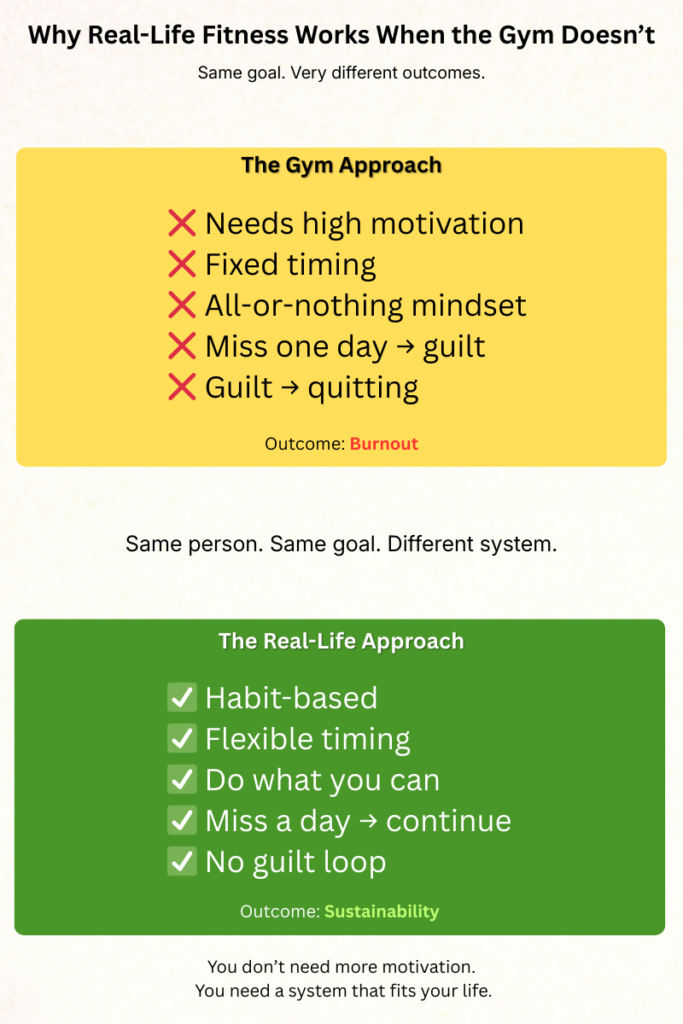
Let’s break down why the gym model quietly works against most people.
1. The All-or-Nothing Mindset
Miss one workout and your brain says:
“What’s the point now?”
So instead of doing something, you do nothing.
2. Guilt Replaces Joy
Fitness becomes punishment.
Not movement.
Not health.
Punishment.
And no one sticks to punishment long-term.
3. Time Friction Is Real
Commute.
Parking.
Changing.
Waiting.
The gym adds extra steps to movement teps most busy adults can’t sustain.
4. Unrealistic Comparison
You don’t just work out at the gym.
You compare yourself.
Comparison kills confidence.
Confidence kills consistency.
Consistency kills results.
This constant pressure to stay perfect is exactly why chasing perfect fitness quietly destroys consistency over time.
What Actually Keeps People Fit for Years (Not Weeks)
This is where most articles stop.
This one won’t.
What works long-term:
- Short daily movement
- Flexible routines
- Zero-guilt days
- Eating without obsession
- Progress measured in energy, not abs
This is why walking beats HIIT for many.
Why home workouts beat gym memberships.
Why consistency beats intensity.
And why sustainable fitness without a gym keeps winning.
According to the Mayo Clinic, many people stop exercising because motivation alone isn’t enough, and long-term fitness requires realistic, sustainable routines.
The Jagmove Philosophy (Why We Say the Opposite)
At Jagmove, we don’t believe in extremes.
We don’t believe in “no pain, no gain.”
We don’t believe one plan fits every life.
We believe in real people with real schedules.
That’s why we say:
- Don’t force the gym
- Eat what you want, balance over time
- Movement beats motivation
Because fitness that fits your life is the only fitness that lasts.
What to Do Instead (If the Gym Isn’t Working)
Don’t quit fitness.
Quit the guilt.
Try this instead:
Walk daily.
Do 10-20 minute workouts.
Stretch while watching TV.
Move when you can, not when it’s perfect.
This approach connects naturally with:
- building fitness consistency without motivation
- focusing on fitness priorities for busy adults
- eating foods that support fitness without dieting
When fitness feels normal, it becomes permanent. Because rather than doing nothing even small movements counts.
Final Thought: The Real Myth Isn’t the Gym
The real myth is this:
“If I can’t do it perfectly, I shouldn’t do it at all.”
That belief keeps people unfit.
Not skipping the gym.
This gym myth isn’t about laziness, it’s about systems that don’t fit real life.
If this article made you feel relieved instead of judged, you’re exactly who this site is for.
And if it helped you rethink fitness even a little, share it with someone who needs to hear this today.
FAQs
Why do most people quit the gym?
Most people quit the gym due to time constraints, guilt from missed workouts, unrealistic expectations and burnout not lack of motivation.
Can you stay fit without going to the gym?
Yes. Many people stay fit through daily movement, walking, home workouts, and consistent habits without ever stepping into a gym.
Is the gym necessary for good health?
No. Health depends on regular movement, balanced nutrition, sleep and stress management not a gym membership.
What’s a realistic alternative to the gym for busy adults?
Short home workouts, walking, lifestyle movement and flexible routines that fit around work and family life.