
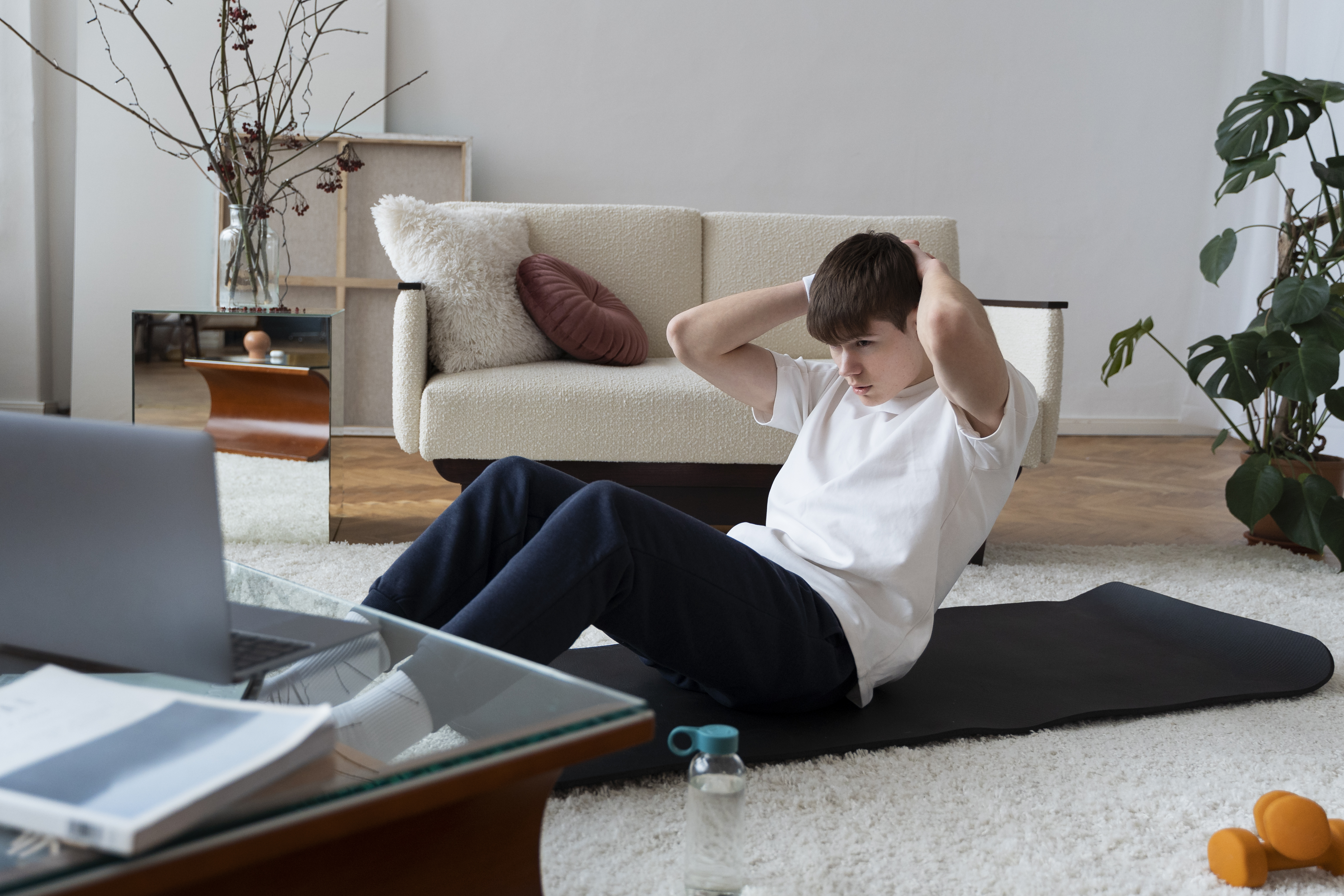
When you stop exercising, the changes in your body do not happen suddenly. They build slowly in ways that are easy to ignore at first. If you have ever wondered what happens when you stop exercising, the answer is not as obvious as people think. Your body does not break or fail, it quietly adjusts to doing less and over time that shift starts affecting how you feel, move, and respond without clearly showing you when it began.
Nothing feels different at first that’s why it continues
You stop for a few days, then a week, then even more. Nothing really changes in a way you can clearly notice. You still move, you still function, and you still feel normal enough, so it seems like nothing is happening at all. But quietly, beneath the surface, something is shifting in the background.
At this stage, your body does not give you strong signals. It does not force you to react. Everything feels manageable, which is why it is easy to continue this pattern without thinking much about it. The absence of discomfort makes it feel safe, even though small changes have already started. Over time, these small shifts begin to affect how you move, think, and respond during the day, which is often why simple tasks feel overwhelming for no reason starts to feel more real than it should.
What people believe and what is actually happening
Most people think stopping exercise only affects fitness or weight, but your body does not work that simply. Movement is not just activity, it is how your system stays active internally. When movement slows down, your body does not shut down it reduces. Energy becomes slower, muscles receive less signal and your body slowly stops expecting movement. Everything still works, just not in the same way as before.
These changes are not dramatic, which is why they are easy to ignore. You feel slightly more tired after simple things, your body feels heavier without any clear reason and you may sit longer without adjusting your posture. There can be stiffness even without effort and your movements may feel less smooth than before. Over time, these small shifts begin to layer on top of each other, creating a version of your body that feels different but not alarming.
Why this is happening more in daily life now
Your body was designed for regular movement, but daily life no longer supports that in the same way. You spend more time sitting, less time moving naturally and more time staying in one position without noticing it. Your body adapts to this quietly. It does not break or fail, it simply becomes less active because it is no longer being used the same way.
Your body becomes what you repeat, not what you plan to do. If movement is no longer part of your routine, your body stops prioritizing it. Muscles become less responsive, posture becomes more relaxed and unsupported and your overall energy feels slightly reduced. Over time, this creates a loop where doing less feels easier and doing more starts to feel harder.
Why starting again feels harder than expected
When you try to move again, it does not feel as easy as before. Your body may feel tight, your energy may feel inconsistent and your movements may feel heavier than they should. This is where people start to question themselves. It feels like something is wrong but nothing is actually wrong. Your body has simply adapted to doing less.
At first, these changes feel small and temporary. Then they repeat more often, and eventually they stay. You begin to accept this version of your body as normal. Slightly slower, slightly heavier, slightly less responsive. When you try to return to movement, the contrast becomes clear and that difference is what feels uncomfortable. Studies on inactivity and health changes have shown similar patterns over time
What this actually reveals
Your body does not react to a single decision, it responds to repeated patterns. When movement disappears, your system reorganizes around stillness. Over time, that becomes your new baseline and it starts to feel familiar even if it is not how your body used to feel.
Some people do not make big or sudden changes, they just start paying attention. They notice how long they stay still, how little they move during the day and how their body feels over time. Sometimes something as simple as this a small tool that creates gentle activation, can help the body feel more present again. Not stronger or faster just more connected than before.
What most people miss is that the body never stopped responding. It was always adapting quietly. The signals were always there, just not strong enough to interrupt daily life.