

Most people don’t struggle with fitness because they lack discipline. They struggle because food advices often feels extreme, confusing, or disconnected from real life.
I’ve tried pushing diets, overthinking meals, and forcing perfect nutrition while juggling work and daily responsibilities. Instead of feeling better, I felt tired, bloated, and inconsistent.
What finally worked wasn’t a diet. To be honest with you I never dieted. It was choosing foods that supported my energy, recovery, and daily movement without adding stress and I also made sure to eat foods I enjoyed. For example, I still had fast food like burgers or pizza maybe twice a week but in moderation and with controlled portions. Instead of three burgers, I ate one. Instead of a super-sized pizza, I chose a medium or small. This same misunderstanding is common in fitness too why most people actually get less fit after joining a gym has more to do with habits than effort.
Satisfy the mind, and it listens. When your mind is aligned, working out with dedication becomes natural not forced.
This article shares five foods that support fitness without dieting, strict rules, or unrealistic expectations.
Why Food Should Support Your Life, Not Control It
When life is busy, your body is already managing stress mentally and physically.
Adding rigid food rules on top of that often backfires. I noticed that whenever I skipped proper meals during workdays or tried to “stay disciplined” by eating too little, my energy dropped fast. Work felt harder. Movement felt heavier. Motivation disappeared.
Fitness doesn’t improve when food becomes another challenge. It improves when food quietly supports your body in the background.
Protein-Rich Foods (Without Overdoing It)
Protein plays an important role in fitness, but more is not always better.
At one point, I pushed protein aggressively because that’s what a few friends of mine suggested and although what most fitness advice promotes anyways. Instead of feeling stronger, I felt sluggish and uncomfortable especially on days when hydration, fiber, and balance were missing.
Your body can use protein well, but when intake becomes excessive and unbalanced, it has to work harder to process and eliminate what it doesn’t need. That extra workload can leave you feeling tired rather than energized.
The better approach is moderation and consistency not just in food but this works for workouts as well. If you’re struggling with consistency alongside nutrition, this guide on how to build fitness consistency without motivation explains how small habits make everything easier.
Simple protein sources that work well:
- Eggs
- Greek yogurt
- Lentils or beans
- Chicken, fish, or tofu
You don’t need massive portions or supplements. Including reasonable amounts across meals is enough to support recovery without overwhelming your system.
Fruits That Help Maintain Energy
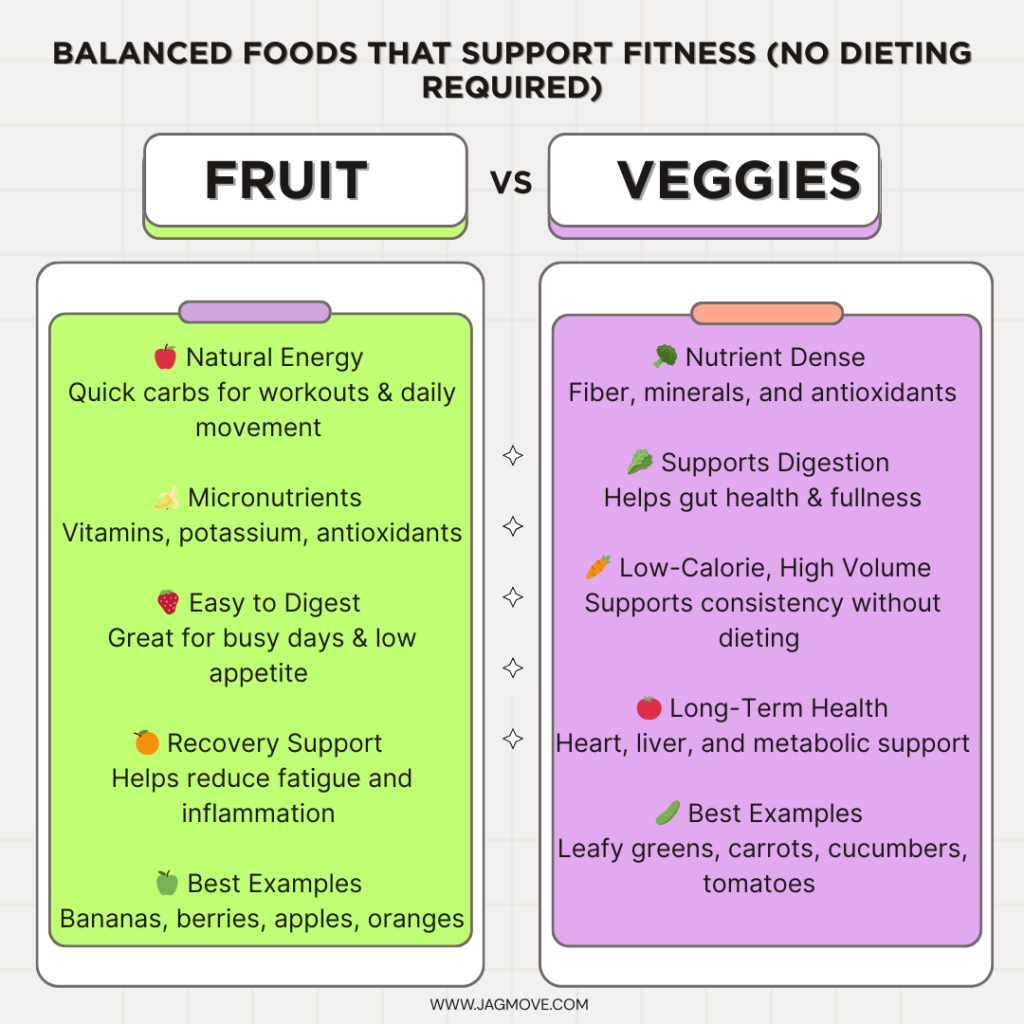
This simple comparison shows why fitness doesn’t require extreme diets. Fruits provide quick energy and recovery support, while vegetables deliver fiber, micronutrients, and long-term health benefits. Together, they create a balanced approach that’s easier to maintain.
On busy workdays, poor fueling shows up quickly low focus, irritability, and afternoon crashes.
I’ve experienced this firsthand when I ignored simple food choices and relied only on coffee or skipped meals altogether.
Fruits help because they:
- Provide natural energy
- Support hydration
- Are easy to eat even when time is limited
Reliable options include:
- Bananas
- Apples
- Oranges
- Berries
They’re simple, portable, and don’t require planning which makes them easier to stick with than complicated snack or food rules. This pairs perfectly with my article on fitness priorities for busy adults.
Vegetables You Can Eat Consistently
Vegetables support digestion, recovery, and overall health but only if you actually eat them most people do not like eating them which in the long run sometimes contributes to different issues.
Instead of aiming for variety or perfection, I focused on vegetables I enjoyed and could repeat without effort:
- Spinach
- Carrots
- Broccoli
- Bell peppers
Frozen vegetables count. Simple cooking counts. What matters most is regular intake, not fancy preparation.
Healthy Fats That Prevent Energy Crashes
Meals that lack fats often lead to quick hunger and energy dips which is the last thing we actually want.
Healthy fats help:
- Keep energy stable
- Support joints and hormones
- Make meals more satisfying
Simple sources include:
- Nuts and seeds
- Olive oil
- Avocados
You don’t need large amounts. Small, consistent portions go a long way.
Foods You Can Rely on Even on Tough Days
This might be the most important point.
Fitness doesn’t fall apart on good days it falls apart on exhausting, unpredictable days.
Foods that support fitness long-term are:
- Easy to prepare
- Familiar
- Low mental effort to repeat
If a food only works when life is calm, it won’t work consistently. The best choices are the ones you can rely on even when energy is low.
Why This Approach Works Long-Term
This approach worked for me because it removed pressure.
I stopped chasing:
- Perfect macros
- Extreme protein targets
- Strict eating rules
And focused instead on supporting my energy alongside real life.
When food supports your body properly, movement feels easier. Recovery improves. Consistency becomes natural instead of forced.
Harvard Health also highlights that balanced nutrition and sustainable habits matter more than extreme diets for long-term fitness.
A Simple Way to Start This Week
Choose one food from this list and make it easier to eat this week.
No overhaul. No reset. No pressure.
Fitness improves when food fits your life not when it fights it.
Frequently Asked Questions
Is eating too much protein a problem?
Protein is important, but excessive intake without balance can feel heavy and draining. Moderation and hydration matter more than extremes.
Can poor eating during workdays affect fitness?
Yes. Long hours, skipped meals, and stress quietly drain your energy. By the time you train, your body is already running on empty, which affects strength, focus, and recovery more than people realize.
Do I need supplements to support fitness?
No. Real food comes first. Supplements are optional, not required.
How soon will I notice changes?
It’s not the weight loss. It’s waking up with more energy, better focus during the day, and workouts that feel more controlled instead of exhausting. Physical changes follow after that gradually.
How do you stay consistent without burning out?
I stopped fighting my mind. When you eat in a way that feels satisfying instead of restrictive, your mind stops resisting. Once that happens, showing up to train takes discipline but not suffering. Constantly chasing perfection can push you into burnout, where emotional exhaustion starts affecting your body long before you notice it mentally.